Brunch with Dick Cheney

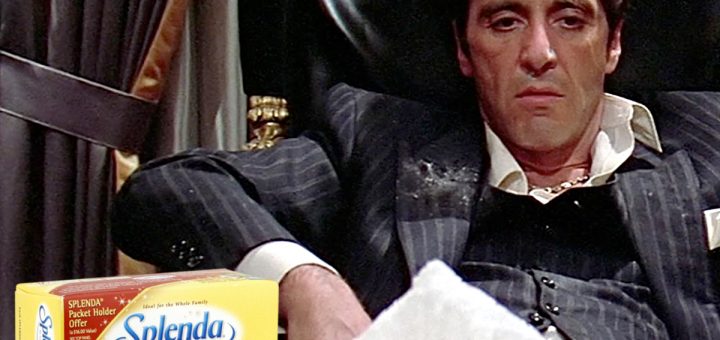
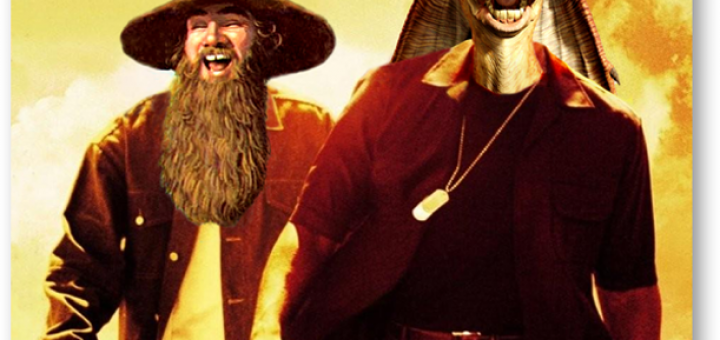
Dick Cheney as Blofeld with Cat“How would you like to have brunch with me and Dick Cheney?” That’s a sentence I never thought I’d say to someone. But I did. It was back in college. I was the Internal Vice Chair of the Academic Assembly, and as one of the officers of the student government, I got to do some interesting things. So when Michigan State booked Dick Cheney as its graduation speaker, they invited a select number of students to a private brunch with the sitting Vice President of the United States. Including me.

When I found out I was invited, I felt a brief moral dilemma. As a liberal, I was strongly opposed to the Bush administration’s policies, and I had more than a few friends who were planning on protesting Dick Cheney’s visit. But then again, I have always been a proponent of open-mindedness and dialogue, so I saw no harm in listening to the man. (I still don’t.) So I decided to go. It was then I found out that I was allowed a plus-one.

I didn’t have a girlfriend at the time, so I had to think about who I wanted to take as a date. There was a girl in one of my Spanish classes who was both cute and conservative, so I have her a call and asked her out to brunch with Dick Cheney. I’m sure she thought I was kidding at first, but when I reminded her that I was vice-president of the student body, she realized I was serious. Then came the really awkward part, asking her for her social security number. (The Secret Service required it.) Thankfully, she gave it to me, and I passed it on to the suits.

On the morning of the brunch, we went through metal detectors into the practice basketball court at the Breslin Center. There were a number of banquet tables, and my date and I sat with the other student government people. Then we waited. And waited. (For some reason, big, important public officials are always running late.) When he finally came out, it was with all of the flair and charisma you would expect from Dick Cheney. (That is to say, none at all.) The year was 2002, and we were halfway between 9/11 and Iraq. Cheney made the case for the War on Terror, as consistently as always. And even though this was a private reception with about 200 people, he didn’t go out of his way to shake hands or talk to individual people. I would have been surprised if he did.

Overall, it was an interesting way to spend the morning. I had a good time chatting with my friends there, and I got to say I had brunch with the Vice President. As for the girl I invited, we never dated, though we did become good friends (despite our different political leanings.) In that regard, I am very glad that I had the chance to invite her, though I hope I never again have to ask a girl for her social security number.

If there’s one thing I admire about Dick Cheney, it’s how comfortable he is with his place in history. Cheney’s been villainized by his opponents, and instead of refuting them, he’s embraced the villainous persona. As much as I disagree with the man’s views and methods, I admire his consistency. A decade after then invasion of Iraq, Dick Cheney is still the closest thing we have to a real-life Bond Villain.

Liberty and Marriage Equality

Liberty and Marriage EqualityI’m not the kind of person to change my Facebook picture for various causes. This is especially true with things like health and education and poverty. Sure I want to cure cancer and feed starving children, but changing my profile picture isn’t going to help. When it comes to the issue of marriage equality, however, I think it could make a difference. Why? This a human-centered problem with a clear solution. LBGT people want the right to marry their partners, and there are bigoted laws standing in their way. Meanwhile, there are nine men and women who get to decide the issue. The Supreme Court justices are famously removed from society, but they are human beings with a heart and soul; people who are dedicated to our democracy. So in this instance, I think it’s important to make my right heard.

I’ve watched as a good half of my friends have changed their profile pictures to the Human Rights Campaign’s special red and pink logo to show their support for marriage equality. As a graphic artist, I felt it was my duty to contribute something to the movement. So instead of using my Photoshop skills to make another silly picture, I made one that shows my support for our gay and lesbian brothers and sisters. It is based on one of my favorite paintings, Eugene Delacroix’s Liberty Leading the People. For this cause I have replaced the French Tricolore with a marriage equality flag. I have also removed the weapons and violence, since this is not a violent movement. (And I certainly hope it doesn’t become one.)

I have created this image for you to share. It is a high-resolution JPEG that you can easily as to your Facebook profile. (Or any other online avatar.) If you believe that all men are created equal (and women and transgendered people), share this as much as you want. Let’s use the Internet to show our commitment to liberty, equality and fraternity.

Decimal Currency in America

Saint Gaudens Double Eagle

If an eagle is worth $10, then a double eagle is worth $20. The Saint Gaudens Double Eagle is often considered the most beautiful coins ever designed.

The metric system has never caught on in the U.S., but when it comes to decimal measures, there is one place where America has been a pioneer. We were one of the first countries to use decimal currency. It’s something most people take for granted nowadays. One dollar equals one hundred cents, so if you have a 99 cent widget, you can buy ten of them for $9.90, or a hundred for $99.00. But this intuitive system hasn’t always existed. Let’s take a look at how decimal currency became the dominant system of money across the world.

Ancient coins

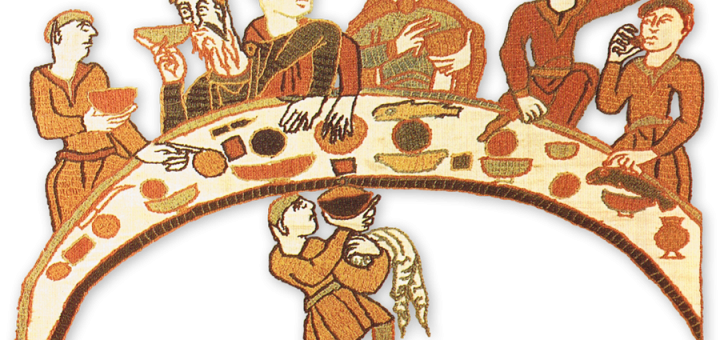
Money evolved out of bartering. First you might trade a couple chickens for a sheep, then to make things easier, people started trading gold and silver instead. But it was hard to measure the exact amount of precious metals, so governments produced standardized coins. With the image and seal of the king of emperor, these standardized coins made trade a lot easier. However, medieval coins were not standardized from one area to another, or even from one precious metal to another. Instead we got different standards for gold, silver and copper.

Medieval money

Eventually, countries standardized conversion rates between different types of currency. For example, in England, one pound was equal to twenty shillings; one shilling was equivalent to twelve pence, and one penny equaled four farthings. This meant that you would need 960 farthings, or 3,840 quarter farthings, to equal one pound. This system seems convoluted to us today, but it had its advantages. There was a huge disparity between rich and poor, so this system created different classes of currency amongst different people. The poorest of the poor would deal in farthings and pence, while the rich would deal in shillings and pounds. And in a society without counting machines or advanced education, this class-based money system kept anyone from having to count too high.

Colonial currency

If America started as a series of English colonies, why do we use dollars instead of pounds. The world “dollar” comes from the German Thaler, which translates to “from the valley” (dale + er), since Thalers were originally minted in the Habsburg-controlled St. Joachim’s Valley. Since the Habsburg family also ruled Spain, the Thaler caught on there as well, where it became equivalent to eight reales. Hence the term “pieces of eight”. In any case, the Spanish were busy mining gold and silver out of Latin America, so in the North American colonies, Spanish dollars were far more common than British pounds.

American dollars

Colonial America used a hodgepodge of currency from Britain and Spain, with locally printed banknotes thrown into the measure. After the colonies gained their independence, each of the thirteen started minting their own money. This just added to the confusion. At one point, a dollar in Georgia was worth five shillings, while just to the north, in South Carolina, it was worth 32.5 shillings. The framers of the Constitution recognized that this was a bad situation, so they created a single, standardized American dollar. It was at this point that the Founding Fathers took it upon themselves to create a decimal currency. After all, these were men of the Enlightenment, and they wanted to give their new nation a fresh start. Still, they had the problem of wealth inequality, so they created new units of currency based on the number ten:

A mill was equivalent to one-thousandth of a dollar. Even in the eighteenth century, this was a small unit of currency, and the smallest official coin was valued at five mills, or one half-cent. Today we still use mills for things like property taxes and gas prices, but we round up or down to the nearest cent.

A cent was (and still is) equal to a hundredth of a dollar. The early cents was roughly equivalent to British pence, and to this day, we still call the coin a penny. (Though we use the plural “pennies”.)

A disme was equivalent to one-tenth of a dollar. This “s” was silent, and within a few years, “disme” became “dime”. We still use dime coins today, though we don’t use the disme/dime as a unit of currency. No one says “that’ll be ten dollars, five dismes and nine cents.” Instead we say, “ten dollars and fifty-nine cents”.

The dollar has been the base unit of currency since the founding of our nation. At the time of its creation, it was equivalent to a Spanish dollar, with all other American units derived from it.

The eagle was worth ten dollars, which was a lot of money in the early days of our country. The US Mint still produces eagle coins, though only for commemorative purposes.

The union was a $100 coin proposed by engraver George T. Morgan. None were ever made, though the mint did produce designs for a $50 coin called the half-union.

As the value of dollars (and cents) decrease, we will likely move on to a unitary currency system, where there are only dollars, with no fractional or decimal currency at all. In Japan, where the Yen is roughly equivalent to one of our cents, such a system is already in place. And in a world where money is all computerized anyway, adding and subtracting large sums will not be a problem.

St. Patrick’s Day and Other Drinking Holidays

Some holidays you spend with family, while others are just an excuse to get off work. But one of the best kind of holidays is Ethnic Drinking Holidays. People like an excuse to drink, and with America’s diverse population, we can celebrate our diversity while getting sloshed. (Mostly the latter.) Of all the ethnically-themed excuses to drink, St. Patrick’s Day is the biggest. Here in the US, everyone dresses in green and drinks a lot of beer. The connection to the Emerald Isle is tenuous, but who cares? It’s a lot of fun. And with St. Patrick’s Day upon us once again, I’ve been thinking about some of the other Ethnic Drinking Holidays we could celebrate.

Oktoberfest (Germany)

German Flag with SteinNext to St. Patrick’s Day, Oktoberfest is my favorite drinking holiday. I love everything about it, the celebration of German culture (I’m half-German on both sides of my family), the beer, the brats, the Bavarian dresses and the fact that it’s celebrated in September. Only the Germans would think to invade a neighboring month with their drinking holiday.

Cinco de Mayo (Mexico)

Mexican Flag with TequilaWhen I was a Spanish teacher, my students begged me to do a party on Cinco de Mayo. I let them bring food that day, but I also made them research the meaning of the holiday. Cinco de Mayo  is a celebration of the Battle of Puebla on May 5, 1862, when Mexico defeated the invading French army. (France went on to win the war, installing an Austrian emperor in Mexico. Yeah, history is weird.) Nowadays, Cinco de Mayo is just another excuse to drink, celebrated more by Americans than by Mexicans.

Chinese New Year (China)

Chinese Flag with BeerChinese New Year (also called Lunar New Year) is celebrated by Asian communities across America. Traditionally there are parades in local Chinatowns, but for the majority of the American population, it’s not a big drinking day. It could be though, especially with the right marketing. I’ll drink a Tsingtao to the new year.

Bastille Day (France)

French Flag with WineFrance’s national holiday commemorates the storming of the Bastille prison during the French Revolution. There are some celebrations in cities with a French heritage, but for the most part, it’s not that big of a deal here. France is the Apple of countries; it has a polarizing effect so that people either love or hate French culture. I count myself as a Francophile, but even if you’re not a fan, there’s nothing wrong with drinking wine and eating brie on a warm July night.

Guy Fawke’s Day (Great Britain)

Union Jack with GinMy Irish and German ancestors are covered, but there are no drinking holidays celebrating my English or Scottish heritage. Part of this has to do with the fact that we celebrate getting away from the British Empire (the Fourth of July, another big drinking holiday). But mostly, it has to do with the fact that Britain has no national holiday. And while Briton’s get a day off for the Queen’s Birthday, this isn’t a celebration of the British people. But there is one British holiday that is well-known here in America: Guy Fawkes Day. The Fifth of November has some real history in this country, first as a pro-English and later as an anti-English celebration. It was also a virulently anti- Catholic holiday, but we can certainly leave that tradition in the past. Instead of burning effigies of the pope, we could celebrate it in the American way, drinking and blowing shit up. What could be better than an English ale, a Scottish whisky and a nice big bonfire? It would certainly give us a Fifth of November that we would remember.


The Horrors of the Poplar Street Bridge

The Mississippi is a wide river, even as far north as St. Louis. Crossing it can be a hassle, especially in Downtown St. Louis. Since 1967, there have been four bridges downtown, two north of the St. Louis Arch and two south of it. And yet, all of the major highways are squashed onto one nightmare of a crossing: the Poplar Street Bridge.

Poplar Street Bridge Diagram

Let’s take a look at the downtown St. Louis bridges, from oldest to newest.

  • Completed in 1974, the Eads Bridge was a marvel of 19th century engineering. For over a century it carried passenger trains across the river. Today, it carries the MetroLink Light Rail, as well as a surface street connecting the casinos in East St. Louis to the entertainment district of Laclede’s Landing.
  • The MacArthur Bridge was opened in 1917 for automotive traffic. A few years later, it added a second deck for rail traffic. Eventually it became a rail-only bridge, and to this day, it still carries Amtrak trains across the Mississippi. I have crossed this bridge on rail, and from the right angle, it’s possible to see the river a hundred feet below.
  • Originally called the Veterans’ Memorial Bridge, the Martin Luther King Bridge was opened as a toll bridge in 1951. While it carried US 40 and US 66 for a while, it could never compete with free bridges. In 1990, the toll was removed, the the aging bridge is not equipped to handle major traffic flow. Still, it does occasionally take overflow from the Poplar Street Bridge.
  • The Poplar Street Bridge is officially called the Bernard F. Dickmann Bridge, but nobody calls it that. (Most St. Louisans probably don’t even know the bridge’s official name.) It’s a boring-looking concrete bridge, completed in 1967. The only thing that makes it notable is the insane amount of traffic crossing it. Basically, the Eads, MLK and MacArthur bridges are two old and decrepit to handle modern freeways, so everything gets bottlenecked across this one span. The real mystery here is why it’s taken them almost fifty years to do something about it.
  • The New Mississippi River Bridge is set to open in 2015, 48 years after the Poplar Street Bridge. When it’s completed, Interstate 70 will be rerouted across it, hopefully easing traffic on the Poplar Street Bridge. The bridge has yet to be named, since Missouri and Illinois can’t seem to agree on a name.

Having lived in both in the City of St. Louis and the suburbs of St. Clair County, Illinois, I can tell you firsthand that the Mississippi River crossings are vital to the region. And while I’m amazed that it’s taken this long, I am excited about the newest bridge. Next time I visit St. Louis, I’ll try to get some pictures to post on this blog.

Page 4 of 5612345678910...2030...Oldest »